14-Day Returns* · 2-Year Warranty · Worldwide Shipping, US Included
14-Day Returns*
2-Year Warranty
Worldwide Shipping, US Included
These variants signals specific subcultures. For example, "kek" emerged from gaming communities like World of Warcraft , while "lulz" often implies a more mischievous or trolling form of amusement. Historical Origins
In modern texting, "lol" (often lowercase) rarely signifies actual laughter. Instead, it serves as a pragmatic particle , acting like a digital "softener" to indicate empathy, friendliness, or a lack of hostility in potentially ambiguous sentences (e.g., "I'm bored lol").
The exact genesis is often debated, but linguists generally point to these milestones:
When "lol" lost its ability to convey genuine humor, users turned to vowel elongation . Adding extra "o"s serves as a visual and rhythmic cue for the duration and intensity of the laughter. It transforms a casual acknowledgement into a more vivid, performative expression of amusement.
What began in the 1980s as a literal description of physical laughter has shifted into a structural tool for digital communication.
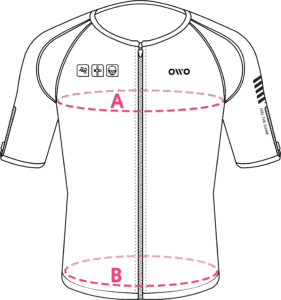
Measure your chest (A) and hips (B) following our indications.
The reference measurement will always be the larger of the two (A or B).
Look in the chart to which size corresponds to that measurement.
| Size | Reference measurements | |
|---|---|---|
| Inches | Centimeters | |
| 2XS | 25.6 – 29.4 | 65 – 74 |
| XS | 29.5 – 32.6 | 75 – 82 |
| S | 32.7 – 36.1 | 83 – 91 |
| M | 36.2 – 39.7 | 92 – 100 |
| L | 39.8 – 42.8 | 101 – 108 |
| XL | 42.9 – 46.3 | 109 – 117 |
| 2XL | 46.4 – 49.9 | 118 – 126 |
| 3XL | 50 – 53 | 127 – 134 |
| 4XL | 53.1 – 55.9 | 135 – 142 |